
If your vehicle shakes, vibrates, or feels uneven while sitting at a stoplight, you’re probably asking yourself: what causes rough idle? A rough idle is one of the most common engine-related complaints and can affect nearly any vehicle, from older sedans to modern turbocharged engines.
While some causes are relatively minor, such as dirty spark plugs or a clogged throttle body, others can indicate more serious issues involving the fuel system, ignition system, or internal engine components. Understanding the root cause can help you avoid unnecessary repairs and prevent further damage.
What Causes Rough Idle?
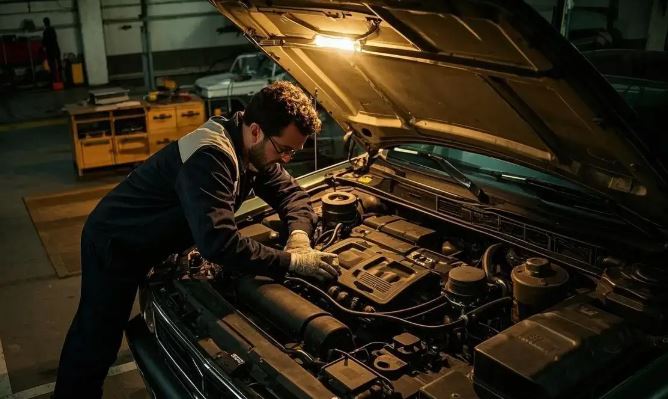
Quick Answer
A rough idle occurs when an engine runs unevenly while the vehicle is stationary. Instead of maintaining a smooth, consistent RPM, the engine may shake, vibrate, stumble, or fluctuate in speed.
A healthy engine should idle smoothly. Most vehicles maintain an idle speed between 600 and 1,000 RPM. When something disrupts the combustion process, the engine loses balance and begins to run rough.
Common Symptoms That Accompany a Rough Idle
A rough idle rarely appears alone. Drivers often notice additional symptoms that help identify the underlying problem.
Common signs include:
- Vehicle shaking while stopped
- Steering wheel vibration
- Fluctuating RPMs
- Engine stalling
- Poor acceleration
- Reduced fuel economy
- Check Engine Light
- Misfires
- Hard starting
The more symptoms present, the easier it becomes to narrow down the cause.
Dirty or Worn Spark Plugs
Quick Answer
Faulty spark plugs are among the most common reasons for a rough idle. When spark plugs fail to ignite the air-fuel mixture correctly, one or more cylinders may misfire.
Spark plugs gradually wear over time. Carbon deposits, oil contamination, and normal electrode wear can reduce their effectiveness.
Symptoms of bad spark plugs include:
- Rough idle
- Misfires
- Reduced power
- Hard starts
- Poor fuel economy
Many vehicles experience noticeable improvements after replacing worn spark plugs according to the manufacturer’s maintenance schedule.
Ignition Coil Problems
Modern engines commonly use individual ignition coils for each cylinder.
When an ignition coil starts failing, it may produce a weak spark or no spark at all. This causes incomplete combustion and often leads to rough idle conditions.
Common signs include:
- Engine shaking
- Misfire codes
- Reduced acceleration
- Flashing Check Engine Light
A faulty coil often affects one cylinder first before progressing further.
Vacuum Leaks
Quick Answer
A vacuum leak occurs when unmetered air enters the engine. Because the engine computer cannot accurately account for this extra air, the air-fuel mixture becomes too lean.
Vacuum leaks are extremely common and can occur through:
- Cracked vacuum hoses
- Intake manifold gaskets
- PCV system components
- Brake booster hoses
- Vacuum fittings
Symptoms frequently include:
- Rough idle
- High idle speed
- Hissing noises
- Lean fuel mixture codes
- Engine hesitation
Vacuum leaks are often overlooked because many of the affected components are hidden beneath engine covers.
Dirty Fuel Injectors
Fuel injectors spray a precise amount of fuel into each cylinder.
Over time, deposits can build up inside the injector nozzles, restricting fuel flow and causing uneven combustion.
Signs of dirty fuel injectors include:
- Rough idle
- Poor fuel economy
- Hesitation during acceleration
- Engine misfires
- Reduced performance
Fuel injector cleaning can sometimes restore proper operation, although severely clogged injectors may require replacement.
Dirty Throttle Body
The throttle body regulates airflow entering the engine.
Carbon buildup around the throttle plate can disrupt airflow at idle, creating unstable engine operation.
Typical symptoms include:
- Rough idle
- Stalling
- Hesitation
- Surging RPMs
Many technicians perform throttle body cleaning as part of routine maintenance because it often resolves idle quality issues.
Mass Air Flow Sensor Failure
Quick Answer
The Mass Air Flow (MAF) sensor measures how much air enters the engine. If the sensor provides inaccurate readings, the engine computer may supply too much or too little fuel.
A faulty MAF sensor can produce:
- Rough idle
- Poor acceleration
- Hesitation
- Reduced fuel economy
- Check Engine Light
In some cases, carefully cleaning the sensor can solve the problem. In others, replacement becomes necessary.
Fuel Delivery Problems
Weak Fuel Pump
The fuel pump must provide consistent pressure to the fuel injectors.
When the pump weakens, fuel delivery may become inconsistent, especially at idle.
Symptoms include:
- Rough idle
- Hard starting
- Engine hesitation
- Loss of power
Fuel pressure testing is usually required for accurate diagnosis.
Clogged Fuel Filter
Older vehicles often use replaceable fuel filters.
A restricted filter can reduce fuel flow and create:
- Rough idle
- Hesitation
- Engine stumbling
- Reduced performance
Many modern vehicles integrate the fuel filter into the fuel pump assembly.
Faulty Oxygen Sensors
Oxygen sensors help the engine computer monitor combustion efficiency and adjust fuel delivery.
When these sensors fail, the air-fuel mixture can become too rich or too lean.
Possible symptoms include:
- Rough idle
- Poor fuel economy
- Check Engine Light
- Increased emissions
Because oxygen sensors affect fuel trim calculations, they can indirectly create idle quality problems.
Idle Air Control Valve Issues
Many older vehicles use an Idle Air Control (IAC) valve to regulate airflow during idle.
If the valve becomes dirty or fails, the engine may struggle to maintain stable idle speed.
Symptoms often include:
- Rough idle
- Stalling
- Surging RPMs
- Difficulty starting
Although many modern vehicles no longer use traditional IAC valves, similar problems can occur through electronic throttle control systems.
EGR Valve Problems
The Exhaust Gas Recirculation (EGR) system helps reduce emissions by introducing controlled amounts of exhaust gas into the intake.
If the EGR valve becomes stuck open, exhaust gases may enter the intake when they shouldn’t.
This can lead to:
- Rough idle
- Stalling
- Hesitation
- Poor acceleration
EGR-related rough idle problems are especially common on high-mileage vehicles.
Engine Compression Problems
Quick Answer
Low compression prevents cylinders from producing their normal share of power, causing the engine to run unevenly.
Common causes include:
- Worn piston rings
- Burned valves
- Head gasket failure
- Cylinder wear
Low compression is one of the more serious causes of rough idle and typically requires mechanical testing to diagnose properly.
Timing Chain or Timing Belt Problems
Engine timing must remain precisely synchronized.
If the timing chain stretches or the timing belt jumps a tooth, valve timing may become inaccurate.
Possible symptoms include:
- Rough idle
- Misfires
- Reduced power
- Engine noise
- Check Engine Light
Timing-related problems can become severe if ignored.
Why Does My Car Idle Rough but Drive Normally?
This situation is surprisingly common.
When the engine is under load and operating at higher RPMs, some problems become less noticeable. Issues such as:
- Minor vacuum leaks
- Dirty throttle bodies
- Slightly clogged injectors
- Weak ignition components
may primarily affect idle quality while having little impact during highway driving.
Why Does Rough Idle Happen When the Engine Is Cold?
Cold-start rough idle often points toward:
- Faulty coolant temperature sensors
- Dirty fuel injectors
- Vacuum leaks
- Ignition system problems
Modern engines rely heavily on sensors during cold starts. Incorrect data can cause temporary rough running until the engine warms up.
How to Diagnose a Rough Idle
Step 1: Scan for Trouble Codes
The first step is connecting an OBD-II scanner.
Common codes include:
| Code | Meaning |
|---|---|
| P0300 | Random misfire |
| P0301-P0308 | Cylinder-specific misfire |
| P0171 | Lean condition |
| P0101 | MAF sensor issue |
| P0505 | Idle control problem |
Step 2: Inspect Spark Plugs
Remove and inspect the plugs for:
- Excessive wear
- Carbon buildup
- Oil contamination
Spark plug condition often reveals valuable clues.
Step 3: Check for Vacuum Leaks
Inspect:
- Vacuum hoses
- Intake manifold gaskets
- PCV system
A smoke test is often the fastest method for finding leaks.
Step 4: Verify Fuel Pressure
Low fuel pressure can mimic ignition and sensor failures.
A pressure gauge can quickly identify fuel delivery problems.
Step 5: Examine Air Intake Components
Inspect:
- Air filter
- Throttle body
- MAF sensor
Airflow-related issues frequently contribute to rough idle complaints.
Can You Continue Driving With a Rough Idle?
Quick Answer
It depends on the cause, but prolonged driving with a rough idle is generally not recommended.
Minor issues may not create immediate danger, but severe misfires can damage the catalytic converter and increase repair costs significantly.
If the Check Engine Light is flashing, the vehicle should be inspected immediately.
Common Misdiagnosis Mistakes
Many vehicle owners replace parts unnecessarily because they skip proper diagnosis.
Frequent mistakes include:
Replacing Spark Plugs Without Testing
Spark plugs are common failures, but they aren’t always the cause.
Ignoring Vacuum Leaks
Small leaks can create major drivability issues.
Overlooking Fuel Pressure
A weak fuel pump often mimics ignition failures.
Replacing Sensors Without Reading Codes
Diagnostic trouble codes provide important clues that should never be ignored.
Typical Repair Costs
| Repair | Estimated Cost |
| Spark plug replacement | $100–$500 |
| Ignition coil replacement | $150–$700 |
| Throttle body cleaning | $75–$250 |
| MAF sensor replacement | $150–$500 |
| Fuel injector cleaning | $100–$300 |
| Fuel injector replacement | $200–$1,500 |
| Vacuum leak repair | $100–$1,000 |
| Fuel pump replacement | $400–$1,500 |
| Timing chain repair | $1,000–$3,500 |
| Engine compression repair | $1,500–$6,000+ |
How to Prevent Rough Idle
Preventive maintenance greatly reduces the likelihood of rough idle problems.
Best practices include:
- Replace spark plugs on schedule.
- Use quality fuel.
- Change air filters regularly.
- Clean the throttle body periodically.
- Address Check Engine Lights quickly.
- Inspect vacuum hoses for cracks.
- Follow manufacturer maintenance intervals.
Conclusion
When people ask what causes rough idle, the answer usually comes down to one of three areas: ignition, fuel delivery, or airflow. Spark plugs, ignition coils, vacuum leaks, dirty injectors, throttle body deposits, and sensor failures account for the majority of rough idle complaints seen in repair shops every day.
The challenge is that many different problems can produce similar symptoms. A rough idle caused by a vacuum leak can feel almost identical to one caused by a failing ignition coil or dirty fuel injector. That’s why a systematic diagnostic approach is so important.
Start with the basics. Scan for trouble codes, inspect maintenance items, check for vacuum leaks, and verify fuel pressure before replacing parts. In many cases, the solution is far simpler and less expensive than drivers initially fear.
Most importantly, don’t ignore a rough idle. What begins as a minor drivability issue can eventually lead to reduced fuel economy, catalytic converter damage, poor performance, and costly repairs. Addressing the problem early often saves both time and money while keeping your vehicle running smoothly for years to come.
Frequently Asked Questions
Can bad spark plugs cause rough idle?
Yes. Worn or fouled spark plugs are one of the most common causes.
Can a vacuum leak create rough idle?
Absolutely. Vacuum leaks frequently cause unstable idle and lean fuel mixtures.
Why does my car shake while idling?
The shaking is usually caused by misfires, vacuum leaks, or fuel delivery issues.
Can dirty fuel injectors cause rough idle?
Yes. Restricted fuel flow often leads to uneven combustion.
Is rough idle expensive to fix?
Costs vary from under $100 to several thousand dollars depending on the cause.
Can a bad battery cause rough idle?
Rarely, but charging system issues can affect engine management systems.
Why is my rough idle worse when cold?
Cold-start fuel and air calculations may expose sensor or ignition problems.
Can a dirty throttle body cause rough idle?
Yes. Carbon buildup often disrupts airflow at idle.
What does a rough idle feel like?
It typically feels like shaking, vibration, stumbling, or fluctuating RPMs.
Can low compression cause rough idle?
Yes. Low compression is a common mechanical cause of rough running.
Is it safe to drive with rough idle?
Minor cases may be drivable temporarily, but diagnosis should not be delayed.
Can bad oxygen sensors cause rough idle?
Yes. Incorrect fuel mixture adjustments can affect idle quality.
Artículos relacionados
Why Is My Engine Making Noise? Common Causes, Diagnosis, and Fixes
Introduction If you've been asking yourself, why is my engine making noise, you're not alone. Unusual engine noises are among…

Why Does My Car Shut Off While Driving? Common Causes, Warning Signs, and Fixes
Few automotive problems are more alarming than having your car suddenly shut off while driving. Whether it happens on a…

Why Is Blue Smoke Coming From My Exhaust? Causes, Symptoms, and Fixes
Blue smoke coming from the exhaust usually means your engine is burning oil. While small amounts of smoke during startup…

Why Is Black Smoke Coming From My Exhaust? Causes, Diagnosis, and Fixes
Introduction Seeing black smoke coming from your exhaust can be alarming, especially if your vehicle was running normally before the…

Why Is White Smoke Coming From My Exhaust? Causes, Diagnosis, and Solutions
Seeing white smoke coming from your exhaust can be alarming, especially if it appears suddenly or continues after the engine…

Why Is My Engine Overheating? Causes, Symptoms, and How to Fix It
Few vehicle problems are as alarming as seeing the temperature gauge climb into the red zone. If you're wondering why…