
A dead battery is one of the most common reasons a vehicle suddenly won’t start. If you know how to jump start a car properly, you can often get back on the road in just a few minutes without calling roadside assistance.
However, modern vehicles contain sensitive electronics, and connecting jumper cables incorrectly can damage batteries, blow fuses, or even harm control modules. That’s why following the correct procedure matters.
This guide explains how to safely jump start a car, what tools you need, the correct cable order, common mistakes to avoid, and what to do if the vehicle still won’t start afterward.
How to Jump Start a Car Safely
Quick Answer
Jump starting a car uses power from another battery to provide enough electrical current for the dead vehicle to crank and start. Once the engine starts, the alternator begins recharging the weak battery.
This process usually works when the battery is discharged but not physically damaged.
Signs Your Car Needs a Jump Start
Several symptoms typically indicate a weak or dead battery.
Common Signs of a Dead Battery
- Engine clicks but won’t crank
- Slow cranking
- Dashboard lights flicker
- Dim headlights
- No electrical power
- Vehicle starts intermittently
- Rapid clicking sound when turning the key
If the battery is completely dead, the vehicle may show no signs of power at all.
What You Need Before Jump Starting a Car
Essential Equipment
Before starting, gather:
- Jumper cables or a jump starter pack
- Another running vehicle with a good battery
- Safety gloves if available
- Safety glasses if available
Important Safety Checks
Never attempt to jump start a battery if you notice:
- Cracked battery case
- Leaking battery acid
- Strong sulfur or rotten egg smell
- Smoke
- Swollen battery
A damaged battery can explode during jump starting.
How to Jump Start a Car Step by Step
Quick Answer
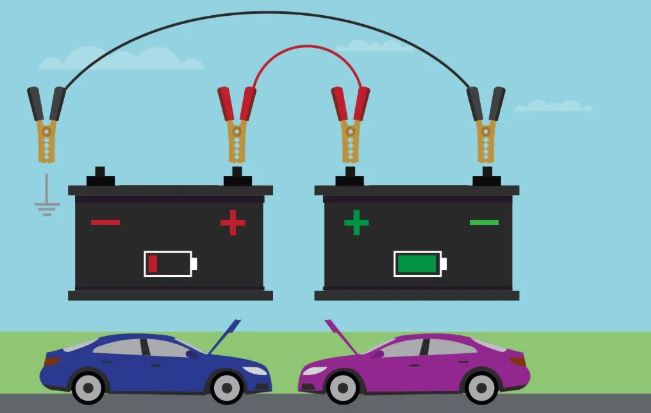
To jump start a car safely, connect the positive cables first, then connect the negative cable to a metal ground point instead of directly to the dead battery. Start the donor vehicle first, then attempt to start the dead vehicle.
Following the correct cable order is extremely important.
Step 1: Position the Vehicles Correctly
Park the working vehicle close enough for the jumper cables to reach, but do not allow the vehicles to touch.
Then:
- Put both vehicles in Park or Neutral
- Engage parking brakes
- Turn off all accessories
- Shut off headlights and climate controls
Step 2: Identify Battery Terminals
Locate:
- Positive terminal (+)
- Negative terminal (-)
The positive terminal usually has:
- A red cover
- A plus symbol
- Red cables attached
The negative terminal usually has:
- Black cables
- A minus symbol
Step 3: Connect the Positive Jumper Cable
Attach the red positive cable clamps in this order:
- Connect red clamp to the dead battery positive terminal
- Connect the other red clamp to the good battery positive terminal
Make sure the clamps grip tightly.
Step 4: Connect the Negative Jumper Cable
Attach the black negative cable carefully.
- Connect black clamp to the good battery negative terminal
- Connect the final black clamp to an unpainted metal surface on the dead vehicle
Good grounding locations include:
- Engine brackets
- Metal engine components
- Chassis bolts
Avoid connecting the final clamp directly to the dead battery negative terminal whenever possible.
Why the Final Ground Connection Matters
Connecting the final negative clamp away from the battery reduces the risk of sparks near battery gases.
Battery hydrogen gas is highly flammable.
Step 5: Start the Donor Vehicle
Start the working vehicle and let it idle for several minutes.
This allows the weak battery to absorb some charge before attempting to crank the dead vehicle.
How Long Should You Wait?
Usually:
- 3 to 5 minutes for mildly weak batteries
- 10 to 15 minutes for severely discharged batteries
Step 6: Start the Dead Vehicle
Try starting the dead car.
If it starts:
- Let both vehicles run
- Do not shut the vehicle off immediately
If it does not start:
- Wait several more minutes
- Recheck cable connections
- Try again
Avoid excessive cranking because it can overheat the starter motor.
Step 7: Remove the Jumper Cables in Reverse Order
Disconnect the cables carefully in reverse order:
- Remove black clamp from grounded metal surface
- Remove black clamp from donor battery
- Remove red clamp from donor battery
- Remove red clamp from revived battery
Keep the clamps from touching each other.
How Long Should You Drive After a Jump Start?
Quick Answer
After jump starting a car, drive for at least 20 to 30 minutes to help recharge the battery. Highway driving works better than short city trips because the alternator charges more efficiently at higher engine speeds.
If the battery dies again quickly, the battery or alternator may be failing.
Why Your Car May Still Not Start After a Jump
Several issues can prevent a successful jump start.
Bad Starter Motor
If you hear only a single click, the starter may have failed.
Corroded Battery Terminals
Heavy corrosion blocks electrical flow.
Faulty Alternator
A failed alternator may prevent battery charging.
Completely Dead Battery
Some batteries become internally damaged and will no longer accept a charge.
Blown Fuse or Electrical Problem
Modern vehicles may have starter or charging system fuse issues.
Common Jump Starting Mistakes
Connecting Cables Backward
Reversing polarity can:
- Blow fuses
- Damage electronics
- Destroy alternators
- Damage ECUs
Always double-check polarity before connecting cables.
Letting Cable Clamps Touch
Metal contact between clamps can create dangerous sparks.
Using Damaged Jumper Cables
Cheap or damaged cables may overheat or fail to transfer enough current.
Jump Starting Frozen Batteries
Frozen batteries can explode during charging attempts.
Can You Jump Start a Push-Button Start Car?
Quick Answer
Yes. Push-button start vehicles can usually be jump started similarly to traditional vehicles, although some models use dedicated jump terminals under the hood instead of direct battery access.
Always check the owner’s manual for manufacturer procedures.
How to Use a Portable Jump Starter
Portable jump packs have become extremely popular because they eliminate the need for another vehicle.
Basic Procedure
- Turn jump pack off
- Connect positive clamp first
- Connect negative clamp to ground
- Turn jump pack on
- Start vehicle
- Disconnect safely
Modern lithium jump starters are compact and powerful enough for most passenger vehicles.
Battery vs Alternator: How to Tell Which One Is Bad
Likely Battery Problem
- Car starts after jump
- Vehicle runs normally afterward
- Battery is old
- Slow cranking previously occurred
Likely Alternator Problem
- Battery warning light is on
- Vehicle dies while driving
- Battery keeps going dead
- Electrical systems flicker
A charging system test confirms alternator health.
Can Jump Starting Damage a Car?
Quick Answer
When done correctly, jump starting is generally safe. However, incorrect procedures can damage sensitive electronics, charging systems, and battery components.
Modern vehicles are more sensitive than older cars.
Vehicles Requiring Extra Caution
Extra care is important with:
- Luxury vehicles
- Hybrid vehicles
- Electric vehicles
- Vehicles with start-stop systems
Some hybrids require special jump points and procedures.
Mechanic Tips for Preventing Dead Batteries
Experienced mechanics often recommend:
- Replacing batteries every 3 to 5 years
- Cleaning terminals regularly
- Avoiding leaving lights on
- Checking charging system voltage yearly
- Driving regularly to maintain battery charge
- Testing batteries before winter
Preventive maintenance greatly reduces unexpected no-start problems.
When You Should Replace the Battery
A battery likely needs replacement if:
- It repeatedly needs jump starts
- It fails load testing
- It’s more than 4 or 5 years old
- It has swollen sides
- It struggles in cold weather
Replacing an aging battery early often prevents roadside breakdowns.
Typical Costs Related to Jump Starting
| Service or Repair | Estimated Cost |
|---|---|
| Professional jump start | $50–$150 |
| New battery | $120–$300 |
| Battery terminal cleaning | $20–$80 |
| Alternator replacement | $350–$900 |
| Starter replacement | $250–$700 |
| Portable jump starter | $80–$250 |
When You Should Call a Professional
Professional help is recommended if:
- The battery leaks acid
- The vehicle still won’t start after jumping
- Electrical smoke appears
- The engine cranks very slowly
- Warning lights stay illuminated
- The car repeatedly dies
Persistent no-start conditions usually indicate deeper electrical or charging system problems.
Conclusion
Knowing how to jump start a car is one of the most useful emergency skills any driver can learn. Most dead battery situations are straightforward and can be resolved safely in minutes if the correct procedure is followed carefully.
The key is understanding cable order, using proper grounding techniques, and paying attention to safety. Many modern vehicle electrical problems happen because jumper cables were connected backward or because damaged batteries were ignored.
If the car starts successfully after a jump, don’t assume the problem is fully solved. Batteries often fail gradually, and alternators can quietly stop charging properly long before complete failure occurs. A simple battery and charging system test can prevent future breakdowns.
In real-world shop diagnostics, many no-start complaints ultimately trace back to weak batteries, corroded terminals, or aging charging systems rather than major engine problems. Starting with the basics almost always saves time and money.
Keeping a quality set of jumper cables or a portable jump starter in your vehicle is a smart investment, especially during winter or long trips. One simple tool can turn a stressful roadside situation into a quick fix.
FAQ
How long should I leave jumper cables connected before starting?
Usually 3 to 5 minutes is enough, though severely dead batteries may need 10 to 15 minutes.
What happens if I connect jumper cables backward?
Reverse polarity can damage electronics, blow fuses, and harm the alternator or ECU.
Can you jump start a completely dead battery?
Sometimes, but severely damaged batteries may not accept enough charge to start.
Should the donor car be running while jump starting?
Yes. The donor vehicle should usually idle while charging the weak battery.
Why does my car die again after a jump start?
The battery or alternator may be failing and unable to maintain proper voltage.
Can cold weather kill a car battery?
Yes. Cold temperatures reduce battery performance significantly.
Is it safe to jump start a modern car?
Yes, if proper procedures are followed carefully.
Can a bad alternator prevent jump starting?
Yes. A failed alternator may leave the battery too depleted to recover properly.
How do I know if my starter is bad instead of the battery?
A bad starter often causes a single loud click rather than rapid clicking.
Can I jump start a hybrid vehicle?
Some hybrids can be jump started, but manufacturer procedures vary greatly.
Why are my jumper cables getting hot?
Poor connections or undersized cables can create excessive resistance and heat.
How long should I drive after a jump start?
Drive for at least 20 to 30 minutes to recharge the battery.
Do portable jump starters work well?
Yes. Modern lithium jump packs are highly effective for most vehicles.
Can a car battery explode while jump starting?
Yes, although rare. Damaged batteries can explode if sparks ignite hydrogen gas.
What should I check first if my car won’t start?
Always begin with battery voltage and terminal condition.
Artículos relacionados
Symptoms of a Bad Starter Motor: Warning Signs You Should Never Ignore
A vehicle that suddenly refuses to start can be frustrating, especially when you're unsure whether the battery, alternator, or starter…
Common Car Electrical Problems: Causes, Symptoms, and Fixes Explained
Introduction Electrical systems are responsible for far more than just starting your vehicle. Modern cars rely on dozens of electronic…

Why Are My Car Lights Flickering? Causes, Diagnosis, and Fixes
Introduction If you're wondering why are my car lights flickering, you're not alone. Flickering headlights, dashboard lights, or interior lights…
How to Test a Car Battery: Simple Methods to Check Battery Health
Introduction A weak or failing battery can leave you stranded without warning. Knowing how to test a car battery is…
Symptoms of a Bad Alternator: Warning Signs You Should Never Ignore
Introduction The symptoms of a bad alternator can range from dim headlights and battery warning lights to complete engine stalling.…
Why Does My Car Battery Keep Dying? Common Causes and Proven Fixes
A car battery that repeatedly dies can be frustrating, inconvenient, and sometimes expensive to diagnose. If you're asking "why does…