
Introduction
The symptoms of a bad alternator can range from dim headlights and battery warning lights to complete engine stalling. Because the alternator is responsible for charging the battery and powering your vehicle’s electrical systems while the engine is running, a failing alternator can quickly leave you stranded if ignored.
Many drivers assume a dead battery is always the culprit when a vehicle won’t start, but in many cases, the real problem is the alternator. Understanding the warning signs early can help you avoid expensive repairs, unexpected breakdowns, and unnecessary battery replacements.
In this guide, you’ll learn the most common symptoms of a bad alternator, how to diagnose the problem, whether it’s safe to continue driving, and what repairs typically cost.
Symptoms of a Bad Alternator
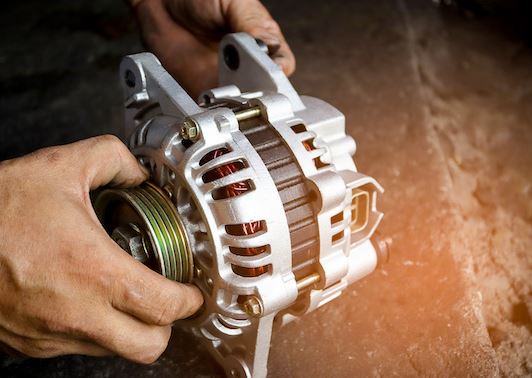
The alternator is a key component of your vehicle’s charging system. Its job is to convert mechanical energy from the engine into electrical power.
While the engine is running, the alternator:
- Charges the battery
- Powers headlights and interior lights
- Supplies electricity to the ignition system
- Supports infotainment systems
- Powers electronic control modules
- Operates accessories such as power windows and climate controls
When the alternator begins to fail, electrical systems start showing symptoms because the battery alone cannot provide enough power for long.
Most Common Symptoms of a Bad Alternator
Quick Answer
A failing alternator commonly causes dim headlights, a battery warning light, electrical malfunctions, slow engine cranking, dead batteries, strange noises, burning smells, and eventually engine stalling. These symptoms often become more noticeable as electrical demand increases.
Battery Warning Light on the Dashboard
One of the earliest warning signs is the battery-shaped warning light on the instrument cluster.
Despite its appearance, this light doesn’t always indicate a bad battery. It often signals a charging system problem, which may involve:
- A failing alternator
- Damaged wiring
- Loose battery connections
- Faulty voltage regulator
If the battery light appears while driving, the charging system should be inspected as soon as possible.
Dim or Flickering Headlights
Quick Answer
Headlights that become dim, flicker, or change brightness with engine speed often indicate that the alternator is no longer supplying stable voltage.
Healthy alternators maintain a consistent electrical output. When output drops:
- Headlights become noticeably dimmer
- Dashboard illumination fades
- Interior lights flicker
- Lights may brighten temporarily when engine RPM increases
Nighttime driving often makes this symptom easier to detect.
Dead Battery Repeatedly
A battery that repeatedly dies may not actually be defective.
Many drivers replace the battery only to experience the same problem weeks later because the alternator isn’t recharging it properly.
Common signs include:
- Frequent jump starts
- Battery dies overnight after driving
- New battery loses charge quickly
- Vehicle starts fine after charging but fails again later
This is one of the most commonly misdiagnosed charging system issues.
Slow Engine Cranking
When the alternator isn’t charging properly, the battery gradually loses its reserve capacity.
As battery voltage drops, you may notice:
- Slow starter operation
- Extended cranking before starting
- Clicking sounds when turning the key
- Intermittent no-start conditions
These symptoms often worsen over several days or weeks.
Electrical Accessories Stop Working Properly
Modern vehicles depend heavily on electrical power.
A weak alternator may cause problems with:
- Power windows
- Radio systems
- Navigation screens
- Heated seats
- Climate control systems
- USB charging ports
- Power locks
You may notice these accessories operating slower than normal or shutting off unexpectedly.
Engine Stalling While Driving
Quick Answer
A severely failing alternator can cause the engine to stall because critical systems such as fuel injection and ignition no longer receive adequate voltage.
This is one of the most serious symptoms.
As charging voltage drops:
- The battery becomes depleted.
- Electronic modules lose power.
- Fuel delivery may become erratic.
- Ignition performance deteriorates.
- The engine eventually shuts down.
If the vehicle stalls and the battery light was previously illuminated, the alternator should be inspected immediately.
Strange Noises from the Alternator
Alternators contain bearings that wear over time.
A failing bearing may produce:
- Grinding noises
- Whining sounds
- Squealing sounds
- High-pitched chirping
Noise often changes with engine speed.
In some cases, the sound actually comes from a worn serpentine belt rather than the alternator itself, making proper diagnosis important.
Burning Rubber or Electrical Smell
A bad alternator may generate excessive heat.
Possible causes include:
- Overheated wiring
- Internal electrical shorts
- Slipping drive belt
- Failing bearings creating friction
Drivers sometimes describe the smell as:
- Burning plastic
- Hot electrical wiring
- Burnt rubber
Any unusual burning odor should be investigated immediately.
Low Voltage Readings
One of the easiest diagnostic methods is measuring battery voltage.
Normal Voltage
| Condition | Voltage |
|---|---|
| Engine Off | 12.4–12.8 V |
| Engine Running | 13.5–14.8 V |
If voltage remains near battery voltage while the engine runs, the alternator may not be charging.
Common Readings That Suggest Alternator Failure
| Voltage | Possible Condition |
|---|---|
| Below 12.0 V | Discharged battery |
| 12.2–12.6 V running | Weak charging system |
| Under 13.0 V running | Possible alternator failure |
| Above 15.0 V | Faulty voltage regulator |
Can a Bad Alternator Cause a Check Engine Light?
Yes.
Many modern vehicles monitor charging system performance through onboard diagnostics.
A failing alternator may trigger:
- Check Engine Light
- Battery Light
- Charging System Warning
- Voltage-related fault codes
Common codes can include:
- P0560
- P0562
- P2503
- P0620
Diagnostic trouble codes should always be interpreted alongside charging system testing.
How to Tell if It’s the Battery or the Alternator
Quick Answer
If the vehicle starts after a jump but dies shortly afterward, the alternator is often the problem. If charging voltage is normal but the battery won’t hold a charge, the battery may be faulty.
Signs Pointing to a Bad Battery
- Battery older than 3–5 years
- Swollen battery case
- Corroded terminals
- Fails load testing
Signs Pointing to a Bad Alternator
- Battery light illuminated
- Electrical systems malfunctioning
- Voltage below charging specifications
- Vehicle stalls while driving
- Repeated dead batteries
Professional charging system testing can quickly distinguish between the two.
Common Causes of Alternator Failure
Alternators typically fail due to:
Worn Bearings
Bearing wear is common after high mileage and often causes whining or grinding sounds.
Failed Voltage Regulator
The regulator controls charging voltage. Failure may cause overcharging or undercharging.
Damaged Diodes
Alternator diodes convert AC current into DC current. Failed diodes often cause:
- Battery drain
- Flickering lights
- Electrical interference
Internal Electrical Failure
Heat and age can damage windings and internal circuits.
Contamination
Oil leaks or coolant leaks can damage alternator components and shorten lifespan.
Can You Drive with a Bad Alternator?
Quick Answer
Driving with a bad alternator is risky. The vehicle may continue operating for a short period using battery power, but once the battery is depleted, the engine can stall unexpectedly.
Short-distance driving might be possible if the alternator has only partially failed, but there is no reliable way to predict how long the battery will last.
Avoid driving if you notice:
- Battery warning light
- Dimming headlights
- Engine stalling
- Electrical failures
These symptoms indicate the charging system may fail completely at any time.
Common Misdiagnosis Mistakes
Many alternator-related repairs become more expensive because the wrong component is replaced first.
Common mistakes include:
- Replacing the battery without testing charging voltage
- Ignoring a slipping serpentine belt
- Overlooking corroded battery terminals
- Assuming a battery light means battery failure
- Replacing the starter when low voltage is the actual issue
A complete charging system inspection often prevents unnecessary parts replacement.
Typical Alternator Replacement Costs
Costs vary by vehicle make, model, and engine design.
| Repair | Typical Cost |
|---|---|
| Alternator only | $150–$600 |
| Labor | $100–$400 |
| Total replacement | $250–$1,000+ |
Luxury vehicles and trucks often have significantly higher replacement costs.
Some vehicles require removing additional components to access the alternator, increasing labor charges.
How Mechanics Diagnose a Bad Alternator
Professional diagnosis typically includes:
- Battery condition test
- Charging voltage test
- Load testing under electrical demand
- Belt inspection
- Wiring inspection
- Voltage drop testing
- Scan tool diagnosis
This approach confirms whether the alternator itself has failed or if another charging system component is responsible.
Conclusion
Recognizing the symptoms of a bad alternator early can save you from being stranded on the side of the road. Warning signs such as a battery light, dim headlights, electrical malfunctions, repeated dead batteries, slow cranking, unusual noises, and engine stalling all point toward possible charging system problems. While some symptoms may initially seem minor, they often worsen rapidly once the alternator begins to fail.
One of the most common mistakes drivers make is assuming the battery is always the cause of a no-start condition. In reality, a weak or failing alternator frequently causes batteries to discharge repeatedly. That’s why proper testing is essential before replacing parts.
If you notice multiple charging system symptoms at the same time, checking system voltage is one of the quickest ways to confirm whether the alternator is functioning correctly. A healthy charging system should typically produce between 13.5 and 14.8 volts with the engine running.
From years of real-world automotive diagnostics, one pattern appears repeatedly: vehicles rarely become completely disabled without first showing warning signs. Paying attention to flickering lights, electrical issues, and dashboard warnings can help you catch alternator problems before they lead to a breakdown. If these symptoms appear, scheduling a charging system inspection sooner rather than later is usually the safest and most cost-effective decision.
FAQ
1. What is the first symptom of a bad alternator?
The battery warning light is often the earliest sign, followed by dimming lights or electrical issues.
2. Can a bad alternator drain a battery overnight?
Yes. Internal diode failure can create a parasitic drain that discharges the battery even when the vehicle is parked.
3. Will a car start with a bad alternator?
It may start if the battery still has enough charge, but it often won’t run for long.
4. How long can I drive with a failing alternator?
It depends on battery condition and electrical demand, but some vehicles may only run for minutes to a few hours.
5. Can a bad alternator cause rough idling?
Yes. Low system voltage can affect engine management systems and ignition performance.
6. What voltage should an alternator produce?
Most vehicles should show between 13.5 and 14.8 volts while running.
7. Can a bad alternator cause transmission problems?
Low voltage can cause transmission control modules to behave erratically in some vehicles.
8. Why do my headlights brighten when I accelerate?
This can indicate unstable alternator output or charging system issues.
9. Can an alternator fail suddenly?
Yes. Although many alternators fail gradually, internal components can sometimes fail unexpectedly.
10. Is the battery light always an alternator problem?
No. Wiring issues, a bad battery, belt problems, or voltage regulator failures can also trigger the warning light.
11. Can a bad serpentine belt mimic alternator symptoms?
Yes. A slipping belt can prevent the alternator from charging properly.
12. Can alternator problems trigger engine warning lights?
Yes. Voltage-related issues can set diagnostic trouble codes and illuminate the Check Engine Light.
13. How often do alternators need replacement?
Many last between 80,000 and 150,000 miles, though lifespan varies widely.
14. Can weather affect alternator performance?
Extreme heat and moisture can accelerate alternator wear and electrical failures.
15. Should I replace the battery when replacing the alternator?
Not necessarily. If the battery tests good, replacement may not be required.
Artículos relacionados
Symptoms of a Bad Starter Motor: Warning Signs You Should Never Ignore
A vehicle that suddenly refuses to start can be frustrating, especially when you're unsure whether the battery, alternator, or starter…
How to Jump Start a Car Safely: Step-by-Step Guide for Beginners
A dead battery is one of the most common reasons a vehicle suddenly won’t start. If you know how to…

Common Car Electrical Problems: Causes, Symptoms, and Fixes Explained
Introduction Electrical systems are responsible for far more than just starting your vehicle. Modern cars rely on dozens of electronic…

Why Are My Car Lights Flickering? Causes, Diagnosis, and Fixes
Introduction If you're wondering why are my car lights flickering, you're not alone. Flickering headlights, dashboard lights, or interior lights…
How to Test a Car Battery: Simple Methods to Check Battery Health
Introduction A weak or failing battery can leave you stranded without warning. Knowing how to test a car battery is…
Why Does My Car Battery Keep Dying? Common Causes and Proven Fixes
A car battery that repeatedly dies can be frustrating, inconvenient, and sometimes expensive to diagnose. If you're asking "why does…