Introduction
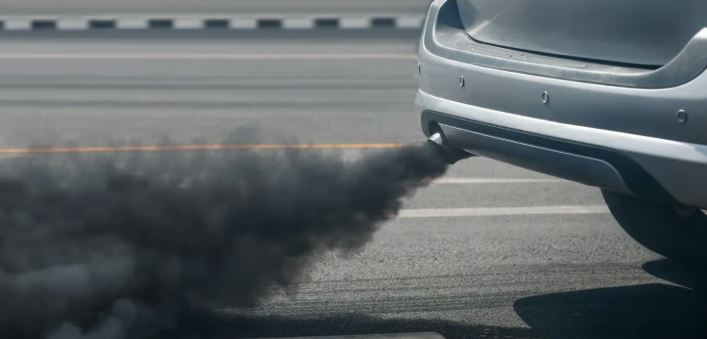
Seeing black smoke coming from your exhaust can be alarming, especially if your vehicle was running normally before the problem appeared. In most cases, black exhaust smoke indicates that the engine is burning too much fuel and not enough air, creating a rich air-fuel mixture.
The good news is that many causes can be diagnosed and repaired before they lead to major engine damage. This guide explains the most common reasons for black smoke, how to identify the culprit, whether it’s safe to keep driving, and what repairs may be necessary.
Why Is Black Smoke Coming From My Exhaust?
Quick Answer
Black smoke from the exhaust usually means the engine is receiving more fuel than it can efficiently burn. Common causes include a clogged air filter, faulty fuel injectors, a bad mass airflow sensor, or problems within the fuel management system.
Modern engines carefully balance fuel and air. When too much fuel enters the combustion chamber, some of it remains unburned and exits through the exhaust as black soot or smoke.
Common Causes of Black Smoke Coming From the Exhaust
Dirty or Clogged Air Filter
A clogged air filter restricts airflow into the engine.
Since the engine receives less air than expected, the fuel mixture becomes excessively rich. This is one of the simplest and least expensive causes to fix.
Common signs include:
- Reduced fuel economy
- Sluggish acceleration
- Black exhaust smoke during acceleration
- Dirty air filter element
Faulty Fuel Injectors
Fuel injectors spray fuel into the combustion chamber. If one or more injectors become stuck open or begin leaking, excessive fuel enters the engine.
Symptoms often include:
- Rough idle
- Fuel smell
- Poor gas mileage
- Engine misfires
- Black smoke at startup
Defective Mass Air Flow (MAF) Sensor
The mass airflow sensor measures how much air enters the engine.
When it fails, the engine computer may incorrectly calculate fuel delivery, causing the engine to run rich.
Symptoms may include:
- Check Engine Light
- Poor acceleration
- Rough running
- Excessive fuel consumption
- Black exhaust smoke
Bad Oxygen Sensor
Oxygen sensors monitor exhaust gases and help adjust fuel delivery.
A faulty sensor can send incorrect data to the engine control module, resulting in excessive fuel injection.
Common symptoms:
- Reduced fuel economy
- Check Engine Light
- Rich-running condition
- Black smoke under load
Fuel Pressure Regulator Failure
The fuel pressure regulator maintains proper fuel pressure.
If pressure becomes too high, the injectors may deliver more fuel than intended.
Signs include:
- Hard starting
- Rich fuel mixture
- Black smoke
- Strong gasoline odor
Faulty Engine Control Module (ECM)
Although less common, software or hardware issues within the engine computer can cause incorrect fuel calculations.
This typically requires professional diagnostics after other causes have been ruled out.
Symptoms That Often Accompany Black Exhaust Smoke
Black smoke rarely appears by itself.
Additional symptoms may include:
- Poor fuel economy
- Rough idle
- Loss of power
- Check Engine Light
- Fuel smell from exhaust
- Engine hesitation
- Carbon buildup on spark plugs
- Failed emissions tests
The more symptoms present, the easier it becomes to narrow down the root cause.
Is It Safe to Drive With Black Smoke Coming From the Exhaust?
Quick Answer
You may be able to drive short distances, but black smoke should not be ignored. A rich-running engine can damage spark plugs, catalytic converters, oxygen sensors, and other expensive components if the problem persists.
If the smoke is minor and the vehicle drives normally, schedule diagnostics soon.
Avoid driving if you notice:
- Severe loss of power
- Flashing Check Engine Light
- Strong fuel smell
- Engine misfires
- Excessive smoke clouds
These symptoms may indicate a problem that can quickly become costly.
How to Diagnose Black Smoke From the Exhaust
Step 1: Check the Air Filter
Remove the air filter and inspect it.
If it appears heavily clogged with dirt, debris, or oil contamination, replace it and monitor whether the smoke disappears.
Step 2: Scan for Diagnostic Trouble Codes
Use an OBD-II scanner to retrieve fault codes.
Common codes associated with rich conditions include:
| Code | Description |
|---|---|
| P0172 | System Too Rich Bank 1 |
| P0175 | System Too Rich Bank 2 |
| P0101 | Mass Air Flow Sensor Performance |
| P0102 | MAF Sensor Low Input |
| P2196 | O2 Sensor Signal Stuck Rich |
These codes can provide valuable clues.
Step 3: Inspect Fuel Injectors
Look for:
- Fuel leaks
- Injector sticking
- Uneven fuel delivery
- Excessive fuel pressure
Professional shops often perform injector balance testing to identify faulty units.
Step 4: Test the MAF Sensor
A contaminated MAF sensor can sometimes be cleaned using specialized MAF sensor cleaner.
Never use brake cleaner or carburetor cleaner on a MAF sensor, as this can permanently damage it.
Step 5: Evaluate Oxygen Sensor Data
Live scan tool data can reveal whether oxygen sensors are reporting accurate fuel mixture information.
This is often one of the most effective ways to diagnose persistent rich-running conditions.
Black Smoke During Acceleration
Quick Answer
If black smoke appears only during acceleration, the engine is likely receiving excessive fuel when demand increases. Common causes include leaking injectors, a faulty MAF sensor, turbocharger issues on diesel engines, or excessive fuel pressure.
During hard acceleration, fuel demand naturally increases.
If the fuel system overcompensates, excess fuel exits the exhaust as black smoke.
Black Smoke at Startup
When black smoke appears primarily during startup, consider:
- Leaking fuel injectors
- Faulty coolant temperature sensor
- Bad fuel pressure regulator
- Cold-start enrichment issues
A brief puff of smoke may not always indicate a serious problem, but repeated black smoke on every startup deserves attention.
Black Smoke in Diesel Engines
Diesel engines have some unique causes of black smoke.
Common examples include:
- Dirty air filters
- Boost leaks
- Turbocharger problems
- Faulty EGR valves
- Clogged intercoolers
- Malfunctioning diesel injectors
Heavy black smoke under load is often associated with insufficient airflow or excessive fuel delivery.
Common Misdiagnosis Mistakes
Many vehicle owners replace parts unnecessarily.
Common mistakes include:
- Replacing oxygen sensors before testing them
- Ignoring a clogged air filter
- Assuming fuel injectors are bad without diagnostics
- Replacing the catalytic converter first
- Overlooking vacuum and intake system issues
A proper diagnosis can save hundreds or even thousands of dollars.
Typical Repair Costs
Repair costs vary by vehicle make, model, and labor rates.
| Repair | Estimated Cost |
|---|---|
| Air Filter Replacement | $20–$80 |
| MAF Sensor Cleaning | $10–$30 |
| MAF Sensor Replacement | $150–$500 |
| Oxygen Sensor Replacement | $100–$400 |
| Fuel Injector Replacement | $150–$1,200+ |
| Fuel Pressure Regulator | $150–$600 |
| Diagnostic Inspection | $75–$200 |
Luxury and turbocharged vehicles typically fall on the higher end of these ranges.
Mechanic Tips for Finding the Root Cause
Experienced technicians often start by looking at fuel trim data.
Negative fuel trims usually indicate the engine is removing fuel because it detects a rich condition.
Other useful checks include:
- Spark plug inspection
- Air intake inspection
- Fuel pressure testing
- Injector leak testing
- Live sensor data analysis
These methods often identify the cause much faster than replacing parts based on guesswork.
How to Prevent Black Smoke From Returning
Routine maintenance plays a major role.
Helpful practices include:
- Replace air filters on schedule
- Use quality fuel
- Address Check Engine Lights promptly
- Perform regular fuel system maintenance
- Repair intake leaks quickly
- Follow manufacturer service intervals
Preventive maintenance is typically far less expensive than repairing damage caused by prolonged rich operation.
Frequently Asked Questions
Why does my car blow black smoke when accelerating?
The most common causes are excessive fuel delivery, faulty injectors, a bad MAF sensor, or restricted airflow.
Can bad spark plugs cause black smoke?
Indirectly, yes. Worn spark plugs can contribute to incomplete combustion and worsen rich-running conditions.
Is black smoke worse than white smoke?
Not necessarily. Black smoke usually indicates excess fuel, while white smoke may indicate coolant entering the engine. Both require diagnosis.
Can low-quality fuel cause black smoke?
In some cases, poor-quality fuel can contribute to incomplete combustion, especially in diesel engines.
Will an oil change stop black smoke?
Usually not. Black smoke is more commonly related to fuel and air mixture problems.
Can a clogged air filter cause black smoke?
Yes. A severely restricted air filter is one of the most common causes.
Does black smoke mean my engine is damaged?
Not always. Many cases involve sensor or airflow issues that can be repaired before engine damage occurs.
Can a bad turbo cause black smoke?
Yes. Turbocharger failures and boost leaks can lead to black smoke, especially in diesel engines.
What does black smoke smell like?
It often has a strong fuel odor due to unburned gasoline or diesel fuel.
Should I stop driving immediately?
If the vehicle is misfiring, losing power, or producing heavy smoke, driving should be minimized until repairs are made.
Conclusion
Black smoke coming from the exhaust is one of the clearest signs that an engine is running too rich. While the exact cause can range from a simple clogged air filter to leaking fuel injectors or faulty sensors, the underlying issue is typically the same: the engine is receiving more fuel than it can properly burn.
The key is not to ignore the symptom. Prolonged rich operation can damage expensive components such as catalytic converters, oxygen sensors, and spark plugs. In many cases, an early diagnosis can prevent a relatively inexpensive repair from turning into a major expense.
Start with the basics by inspecting the air filter, scanning for trouble codes, and checking for obvious fuel system issues. If the problem persists, a professional diagnostic inspection can pinpoint the exact cause using fuel trim data, sensor readings, and fuel pressure testing.
From years of real-world automotive diagnostics, one pattern remains consistent: vehicles that are diagnosed early are usually cheaper and easier to repair. Addressing black smoke promptly not only restores performance and fuel economy but also helps protect the long-term health of the engine.
Artículos relacionados

What Causes Rough Idle? Common Causes, Symptoms, and Fixes Explained
If your vehicle shakes, vibrates, or feels uneven while sitting at a stoplight, you're probably asking yourself: what causes rough…
Why Is My Engine Making Noise? Common Causes, Diagnosis, and Fixes
Introduction If you've been asking yourself, why is my engine making noise, you're not alone. Unusual engine noises are among…

Why Does My Car Shut Off While Driving? Common Causes, Warning Signs, and Fixes
Few automotive problems are more alarming than having your car suddenly shut off while driving. Whether it happens on a…

Why Is Blue Smoke Coming From My Exhaust? Causes, Symptoms, and Fixes
Blue smoke coming from the exhaust usually means your engine is burning oil. While small amounts of smoke during startup…
Why Is White Smoke Coming From My Exhaust? Causes, Diagnosis, and Solutions
Seeing white smoke coming from your exhaust can be alarming, especially if it appears suddenly or continues after the engine…
Why Is My Engine Overheating? Causes, Symptoms, and How to Fix It
Few vehicle problems are as alarming as seeing the temperature gauge climb into the red zone. If you're wondering why…